
How to Build a Website With AI in One Session
Around 27% of small businesses in the United States still had no website in 2026, and globally that figure is closer to 40%, according to B2B Lead Finder. The usual reason is not laziness. It is the quote. A decent site from an agency costs real money, so plenty of owners decide a Facebook page will do. That maths has changed. You can now build a website with AI, start to finish, in a single working session by yourself.
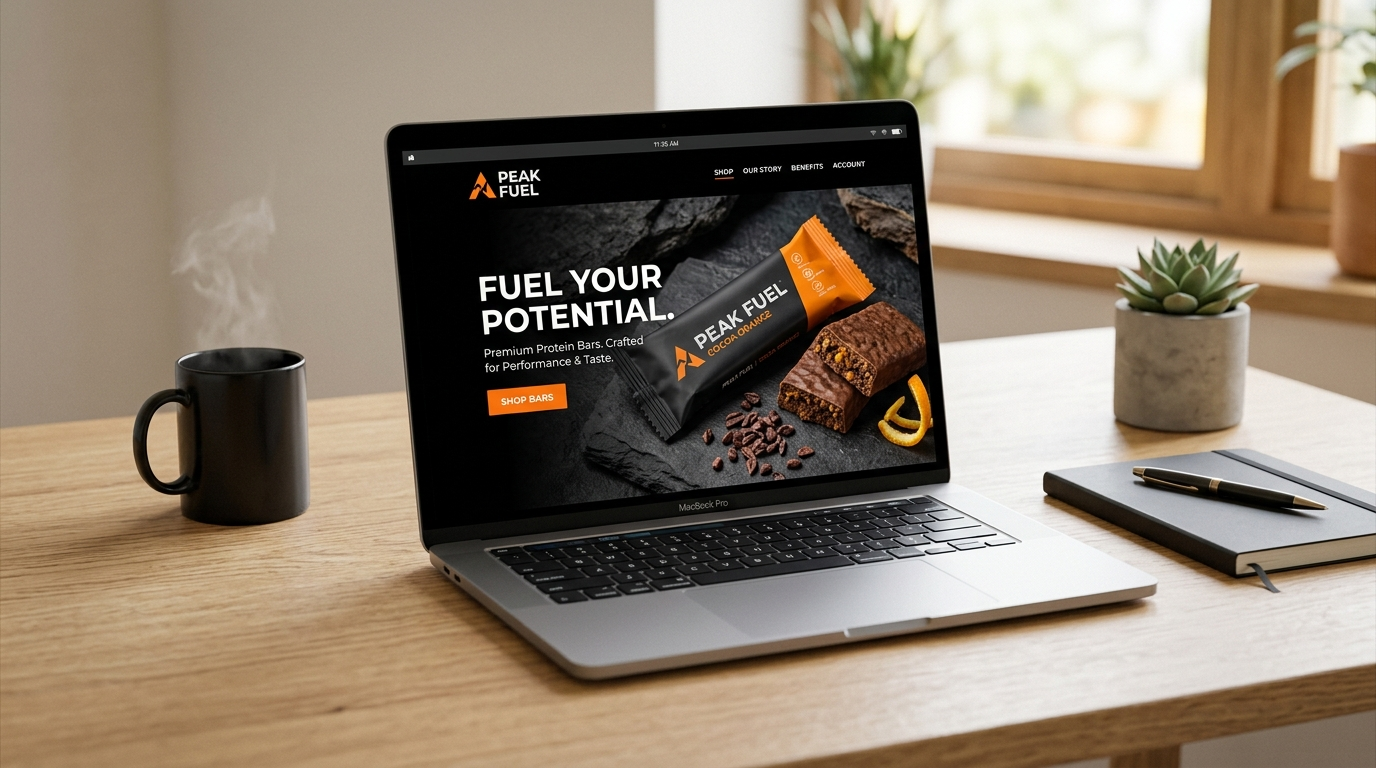
This is not a drag-and-drop template builder with AI bolted on. It is describing the business you want, in plain English, and watching the tool generate the images, write the copy, lay out the sections, and hand you a finished site. In the walkthrough below, I built a full site for a fictional protein bar brand in one sitting, with no fancy prompts and no code. Here is exactly how the process works, the tools involved, and where it still needs a human.
What it means to build a website with AI
To build a website with AI means giving an AI model a description of your business and letting it produce the actual site: layout, copy, images, and structure, ready to host. You are not picking a theme and filling in boxes. You are briefing a capable assistant the way you would brief a web designer, then refining what it gives back.
The tool doing the heavy lifting here is Claude Fable 5, the model I ran inside Claude Cowork. Cowork is the workspace where the AI can hold context, generate files, call other tools, and build something end to end rather than just chatting. The reason I used it over a plain chat window is simple: it gets twice the usage allowance and direct access to Fable 5, which is the engine that turns a brief into a working site.
The key shift is that the model handles the parts that used to need three different specialists. It writes the headlines, generates the product photography, structures the page, and even asks you questions when a decision is needed. Your job moves from doing the work to directing it.
Why small businesses still pay thousands for a site
Most owners avoid a website because of the price tag, and the price tag is real. A professionally built small business site in Ireland typically runs anywhere from €1,500 to €5,000, and that is before you factor in copywriting, photography, and ongoing maintenance. Go the cheap WordPress-template route instead and you usually end up with something basic that looks like every other templated site online.
That cost gap is exactly why so many businesses skip the site entirely. The problem is what skipping it costs them. Around 75% of consumers judge a company’s credibility by its website, according to Stanford’s web credibility research. No site, or a bad one, quietly tells people you are not the real deal before they ever speak to you.
There is a second angle here, and it is the interesting one. If you can build a website with AI in an afternoon, you do not just solve your own problem. You can solve it for other businesses. The rate of businesses with no website is highest among trades and contractors, where B2B Lead Finder puts the figure between 45% and 56%. That is a local market sitting on your doorstep: the plumber, the barber, the bakery down the road who never got around to it because the quote scared them off.
The tools that build a website with AI
You do not need a big stack to do this. You need a model that can build, a way to generate visuals, and somewhere to host the result. Here is the working setup behind the build.
Claude Fable 5 as the builder
Claude Fable 5, run inside Claude Cowork, is the tool that actually assembles the site. You give it a brief, and it generates the page structure, writes the copy, places the images, and builds out each section: hero, email capture, testimonials, nutrition breakdown, and a product range. When it needs a decision, it asks rather than guessing. During my build it stopped to ask how the email capture should work and whether it should generate extra products, which is exactly the behaviour you want from something building on your behalf.
Higgsfield for the images
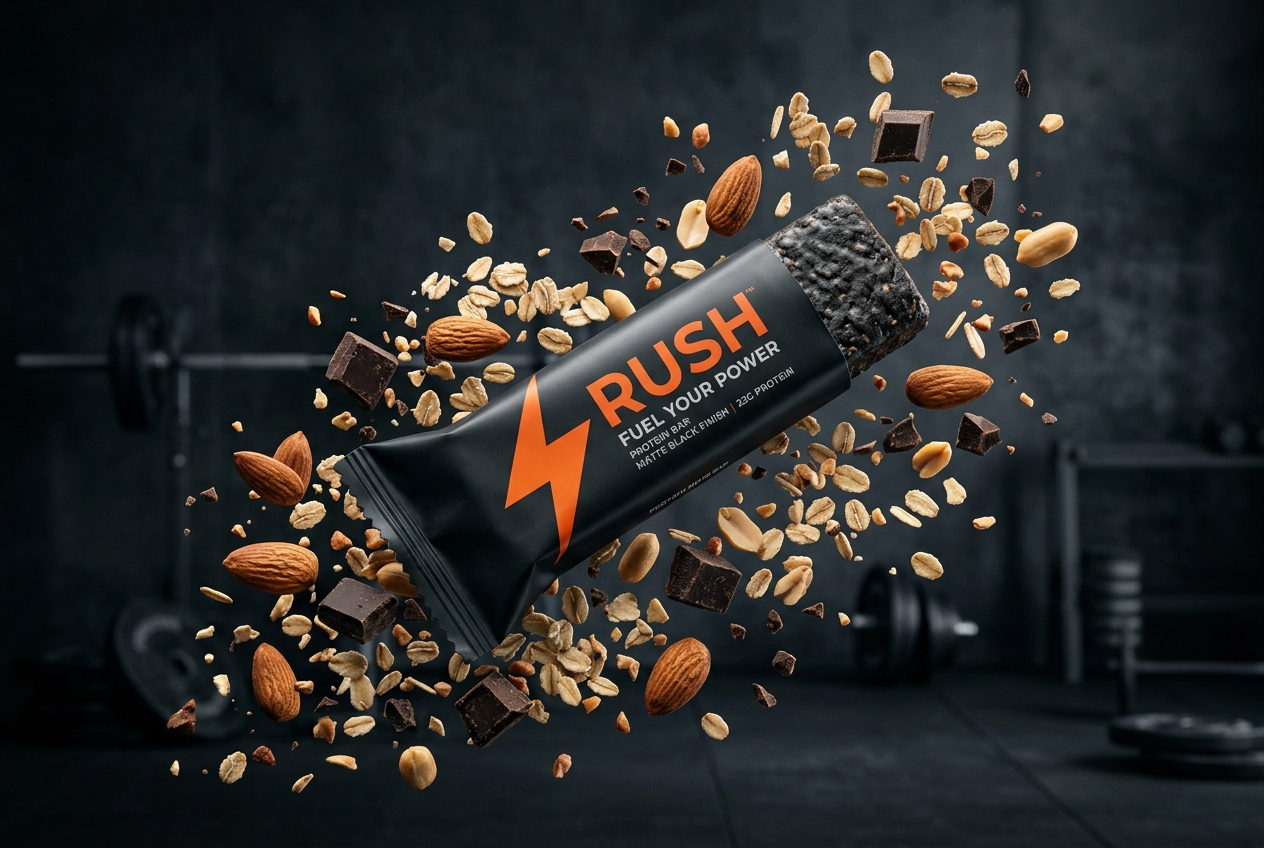
Higgsfield handled the product photography. Before the site gets built, you need images, and this is where most AI-built sites fail: generic stock or obvious filler. I prompted Higgsfield to generate a hero shot of the protein bar in its wrapper, then a second shot with the wrapper open, showing the ingredients, picking the brand colours itself. It is the same image engine I lean on across projects, and if you want the wider picture of where it fits, I cover it in my rundown of the AI tools I actually use for content.
Seedance for motion
To avoid the flat, static look, I had it use the Seedance video model to turn the hero product image into a short cinematic animation: the bar drifting toward the camera while ingredients tumble out behind it. That single piece of motion in the hero section is what separates the result from the standard template look most people expect from a small business site.
ChatGPT and Firebase as the no-cost path
Higgsfield is convenience, not a requirement. If you do not have it, ChatGPT or Gemini will generate the product images from the same prompts, and I showed exactly that in the build. For hosting, I use Google Firebase, which offers free hosting for a set number of sites, so once your domain is sorted you can take the finished build live without another bill.
How to build a website with AI: the step-by-step
To build a website with AI, you work in two stages: generate the images first, then have the model build the site around them. Here is the exact sequence I followed, and it took roughly twenty minutes start to finish.
- Brief the images. Tell the AI what the business is and what visuals you need. I asked for a hero shot of the protein bar in its wrapper and a second with it open, showing the ingredients, and let the model choose colours that would stand out. It saved the images to a shared folder ready for the build.
- Add motion to the hero. Send the hero image back and ask for a short, cinematic animation in the same colours. This becomes the moving hero section, which is the single biggest upgrade over a static template.
- Write the build brief. Describe the full site in one go. I told it to build a highly polished site that looks like a €10,000 agency-made site, with a hero section, a free-sample email capture, testimonials, a nutritional breakdown, and a small catalogue of products. Naming the standard you want, “make it look expensive,” genuinely shifts the output.
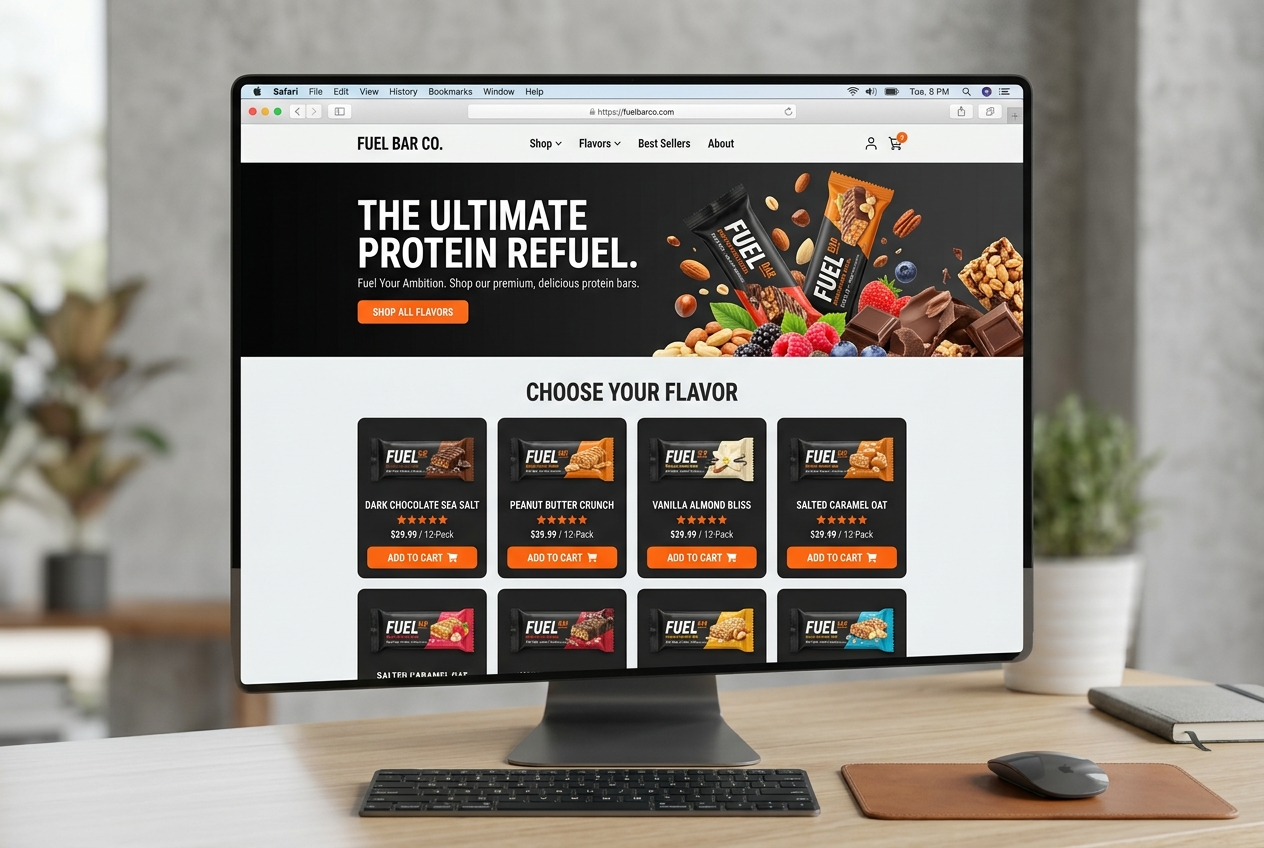
- Answer its questions. A good build tool will pause and check decisions: how the email capture behaves, whether to generate extra product variants. Answer them and let it run. Mine generated several flavour variants on its own.
- Review the first pass. The model builds the full site and verifies it works before handing it back. Scroll the whole thing. My first pass already had working buttons, animated counters, the product range, and testimonials, with no edits.
- Refine the weak section. Pick the one part that is not right and describe the fix. For me it was the hero video stuttering on loop, so I asked for a cleaner reset and a different treatment. One instruction, one revision.
- Take it live. Download the build as files and upload them to your host, or connect the AI to a hosting platform and push it live directly. On Firebase, that means free hosting once your domain is pointed at it.
Pro tip: Before you brief the build, spend five minutes on a site like Dribbble looking at layouts you like. You do not need to design anything. You just point the AI at a style and say “something along these lines,” and it has a reference instead of guessing. A rough idea steers the output far better than a blank brief.
What you actually get, and where it still needs you
The honest result is a genuinely good site in about twenty minutes: hero with motion, email capture, nutritional breakdown, a product range with several variants, testimonials, and working interactions, all on brand. It stands out far more than the templated sites most small businesses settle for, and it cost a fraction of an agency quote.
It is not fully hands-off, and pretending otherwise would be the AI-magic nonsense I avoid. You still make the calls: which hero treatment to keep, where the spacing is off, which copy to tighten. The email capture is a placeholder until you connect your own email system. And going live still needs a domain and hosting set up properly. The AI removes the production grind, not the judgement.
That trade is the whole point. The model does the part that used to cost thousands and take weeks. You do the part that needs taste and a decision, which takes minutes. If you want to see how this slots into a wider toolkit, my guide to AI tools for small business covers the rest of the stack.
FAQ
Can you really build a website with AI in one session?
Yes. Using Claude Fable 5 inside Claude Cowork, I built a full small business site, with a hero animation, email capture, testimonials, a nutrition breakdown, and a product range, in roughly twenty minutes. The AI generates the images, writes the copy, and lays out every section. You direct it and refine the result, rather than building anything by hand.
Do I need to know how to code to build a website with AI?
No. The entire process is done in plain English. You describe the business and the sections you want, answer a few questions the model asks, and review what it builds. There is no code written or edited by you at any point. The only technical step is connecting a domain and hosting when you are ready to go live.
What does it cost compared to hiring an agency?
A professionally built small business site in Ireland usually costs €1,500 to €5,000. Building it with AI replaces the bulk of that with the cost of the AI tools you already use, plus hosting. Google Firebase offers free hosting for a set number of sites, so the live cost can come down to your domain and subscriptions rather than a four-figure quote.
Can I build websites for other businesses this way?
Yes, and it is a real opportunity. With trades and contractors, 45% to 56% have no website at all. If you can build one with AI in an afternoon, you can offer that to local businesses that were priced out before. You bring in their own photos instead of generating product shots, and the rest of the workflow stays the same.
Ready to build this for your own business?
You no longer need a €5,000 budget or a developer to put a proper website live. With the right AI tools and a clear brief, you can build a website with AI in a single session and have something that looks like it cost far more. If you want the exact prompts, workflows, and tools I use to do this, join the Marketing Hub and get the full playbook, with everything I build and test shared inside.