
Twelve people commented on one reel. Six of them ended up on my email list.
That is the entire case study, and it is worth more than any follower count I could quote you. Instagram lead generation gets talked about as though it needs a big audience, a budget, or a funnel diagram with nine boxes. It does not. It needs one piece of content worth asking for, a way to deliver it automatically, and somewhere for the email address to land.
Below is the exact system, the numbers it produced, and the one setting that decides whether it works at all.
Why Instagram Lead Generation Beats Posting And Hoping
Most business owners treat Instagram as a billboard. You post, people look, and nothing measurable happens. The account grows slowly and the engagement is fine. Yet none of it turns into anyone you can actually contact next week.
Messaging is the part that changes that. According to Meta, one billion people message a business every week across WhatsApp, Messenger and Instagram Direct. People are already comfortable talking to companies in a DM. Meanwhile, Sprout Social found that 29% of users have made a purchase on Instagram, putting it third among platforms where buying actually happens.
So the intent is there. However, a comment sits in public where you have to notice it. Similarly, a DM sits in a thread you have to write by hand. Neither scales past about ten people before you quietly stop bothering.
The Difference Between A Follower And A Lead
A follower is a rental. The platform decides whether they ever see you again. Furthermore, one algorithm change can end the relationship without either of you agreeing to it.
An email address is yours. That distinction matters more than it sounds, because email still gets opened. Mailchimp puts the average open rate across its analysed campaigns at 34.23%. Moreover, that ranges from 27.34% at the low end to 40.55% for the best performing category. Roughly a third of a list you own will see what you send, on a day you choose.
The job of Instagram lead generation, then, is not to collect followers. It is to convert attention you rented into contacts you own.
The Comment To DM System, Start To Finish
The mechanic is old and it still works. Someone comments a keyword on your post, and they get sent something useful in their DMs. What has changed is that the setup no longer takes a specialist or a second subscription.
Here is the shape of it:
- Publish a post or reel that promises something specific.
- Ask for a single keyword in the comments.
- An automation watches for that keyword.
- It sends the DM with the link.
- The link goes to a page that captures the email address.
Step five is where most people leak. If the DM sends someone straight to a PDF, you have given away the thing and learned nothing about who took it. Sending them to a page first is the difference between 12 comments and 6 leads.
Pick A Keyword People Can Actually Spell
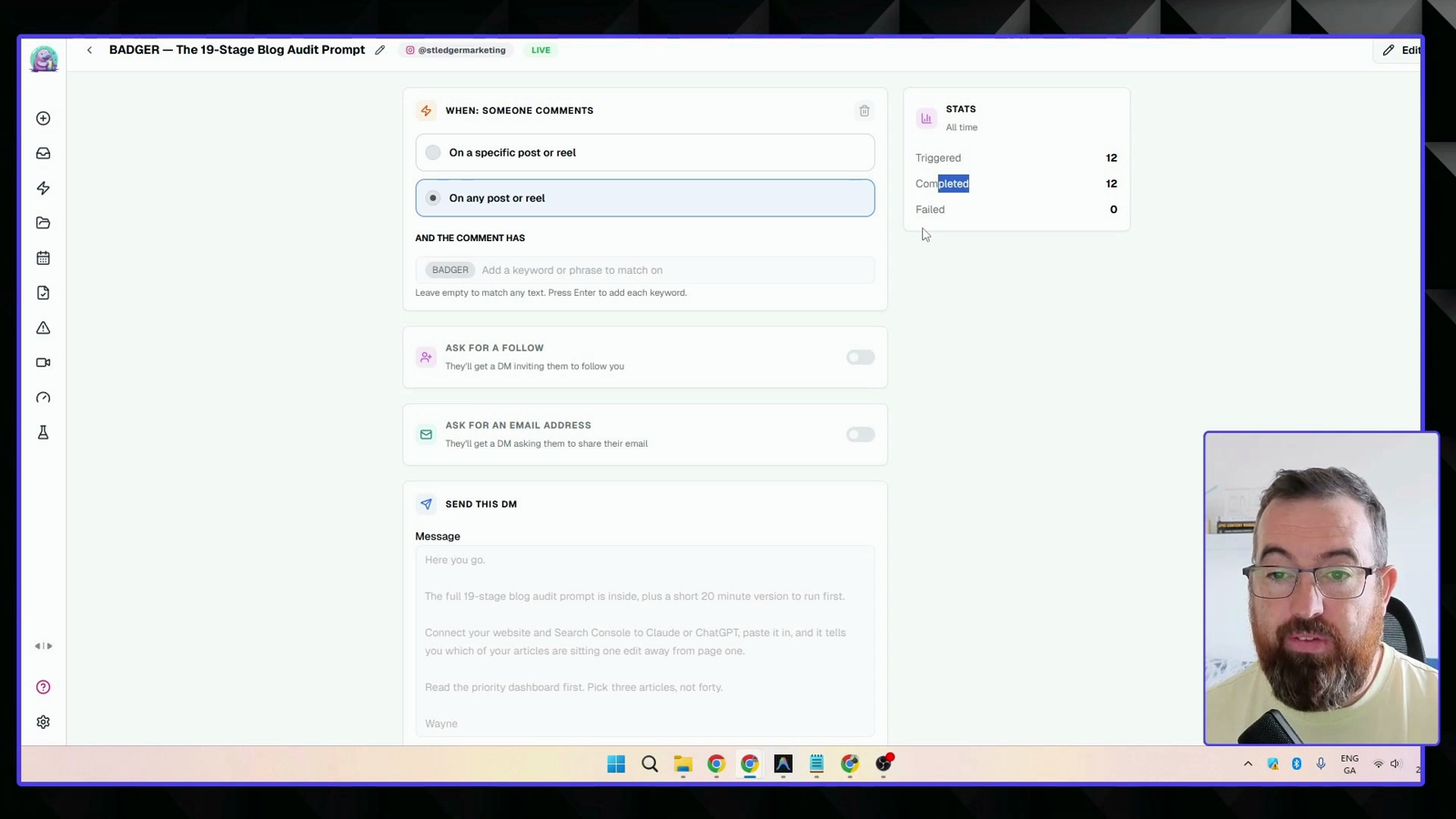
I use odd, distinctive words. Falcon. Badger. Osprey. They are memorable and they never collide with normal conversation in the comments, which keeps the automation clean.
That said, I got this wrong at first. A keyword like "Osprey" is easy to type but tells the reader nothing. In addition, I found myself stumbling over it on camera. For a video about video editing, "auto edit" works better. Therefore the rule I settled on is simple: distinctive enough that nobody triggers it by accident, obvious enough that it relates to what you are giving away.
The Setting That Decides Whether It Works
This is the part worth reading twice. Most comment to DM tools let you require that someone follows you before the automation will send them anything.
It sounds sensible. It is not. You are adding a condition between someone raising their hand and you delivering the thing they asked for, and every condition costs you people.
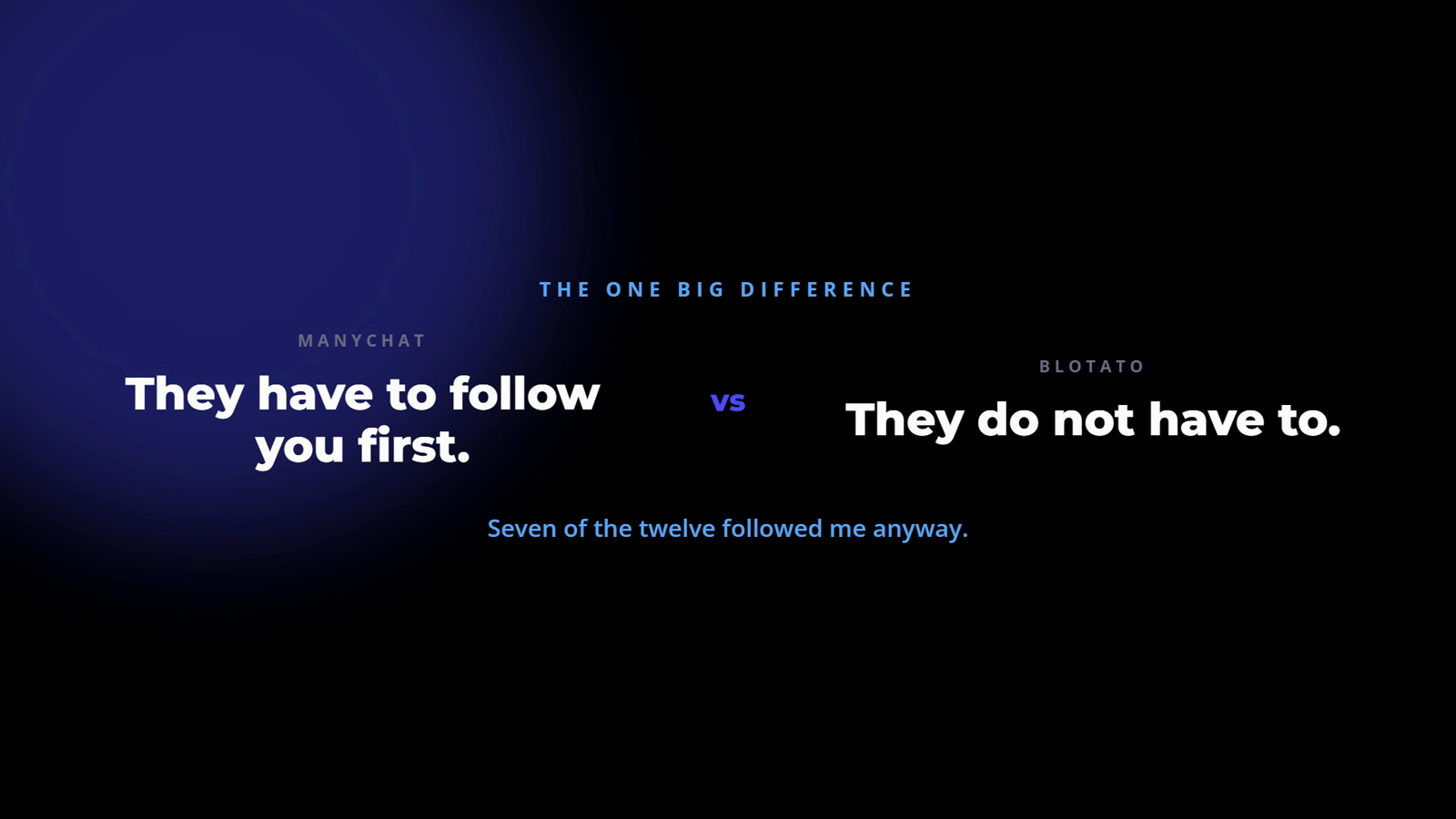
I turned the follow requirement off. Of the twelve people who commented, seven followed me anyway, without being asked. The follow was a by-product of getting something useful, rather than a toll charged before delivery. In contrast, gating it would have meant losing anyone who wanted the guide but was not ready to commit to the account yet.
Building It Without A Second Subscription
For a long time this needed a dedicated chat tool. In practice that meant paying for one product to handle DMs, and a separate one to schedule the posts that generate the DMs. For a small business those two line items add up fast, and neither one does the other's job.
I now run the whole thing through Blotato, which handles the comment to DM automation and the scheduling in the same place. The reason I moved was not novelty. Instead, it was the maths. The plan I am on is $29 a month and includes a thousand active contacts, although the tier I had been paying for elsewhere was $14 a month for 250. Closer to $18 once tax landed.
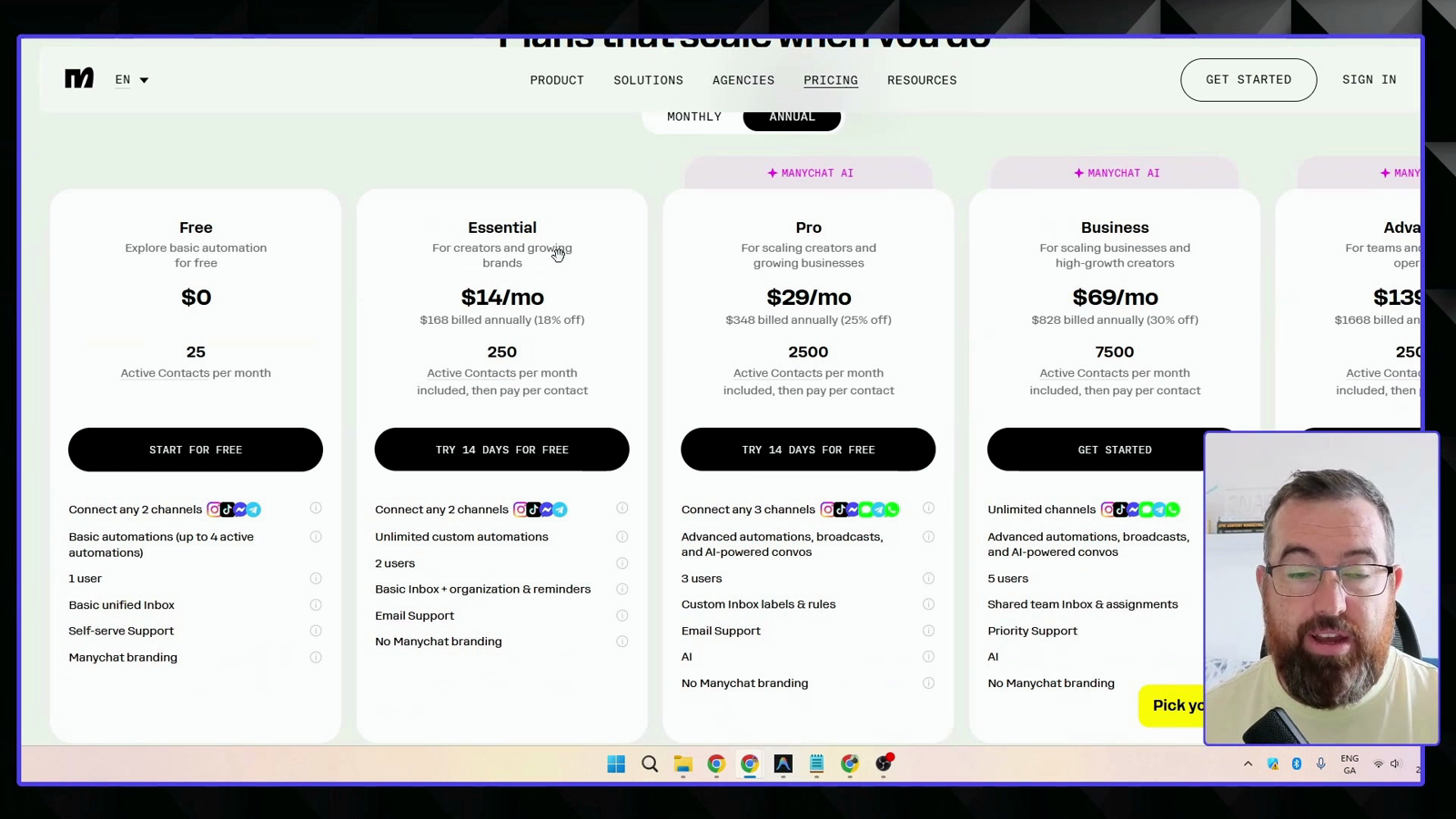
Active contacts are the real constraint on any DM tool. Every person who triggers your automation counts against that month's allowance. As a result, 250 sounds generous until one reel does well and you spend a fortnight throttled. Four times the headroom for fifteen dollars more is the trade I took.
Let The AI Do The Configuration
The part that used to take an afternoon now takes minutes. I described what I wanted in plain English and pointed Claude at the lead magnet I had already written. Then it built the automation through the connector: the trigger, the keyword, the DM copy, and the link.
For example, the instruction was close to this: use my most recent lead magnet, the keyword is Falcon, the page already exists, just build the automation. No fields, no menus, no documentation.
That is worth understanding as a pattern rather than a party trick. First, you write the thing that has value. Next, you describe the delivery in a sentence. Finally, the tool assembles the plumbing. The judgement stays with you and the clicking does not.
Cover Both Platforms While You Are There
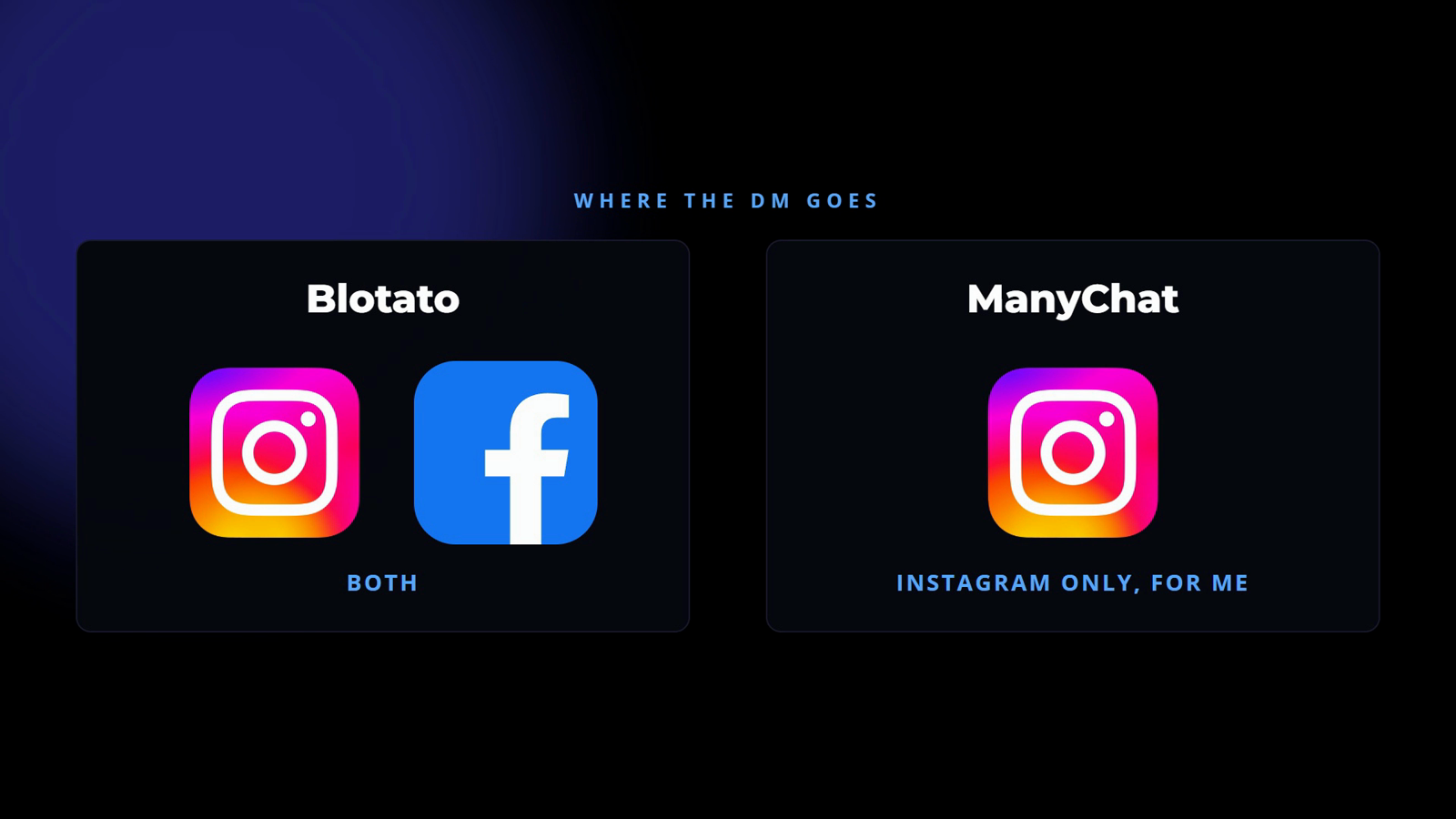
One more thing that surprised me. The same automation runs on Facebook as well as Instagram, from the same build, which the tool I used previously never managed for me.
Most small businesses have a Facebook page they have half given up on. If the automation is already built, extending it there costs nothing and occasionally produces leads from an audience you had written off.
What The Numbers Actually Looked Like
I am wary of case studies that quote a percentage without the raw figures underneath, so here is everything.
| Metric | Result |
|---|---|
| Comments on the keyword | 12 |
| DMs sent | 12 |
| DMs failed | 0 |
| People who then followed | 7 |
| Email addresses captured | 6 |
| New followers from the reel overall | 13 |
| Time to make the reel | About 5 minutes |
Six leads is not a headline. However, it came from one reel that took about five minutes to record and edit on a phone, on an account that is not large. The conversion from comment to email address was roughly half, which is the figure I would ask about if someone else were showing me this.
Why Half Is A Realistic Number
The people commenting have already done something harder than clicking. They read the post, understood what was on offer, and typed a word in public. That is a much stronger signal than a scroll or a like.
As a result, asking for an email at that point is not a cold request. They are mid-action, they want the thing, and the form is one step. The half that do not convert are usually the ones who wanted a quick look rather than the resource itself, and losing them costs you nothing.
The Honest Limitations
Two things worth knowing before you build this.
The automation does not post a public reply on the comment. When I first ran it, I assumed it had failed, because nothing appeared under the post. It had worked perfectly and the DMs had all landed. If you set this up and see silence in the comments, check the DMs before you start troubleshooting.
The second limitation is more structural. This system works when you have something genuinely worth asking for. A guide, a template, a walkthrough, a checklist that solves one problem properly. In contrast, if the lead magnet is thin, the automation will deliver thin material efficiently, and the email addresses you collect will unsubscribe on the first send.
Where To Start This Week
If you want to run this on your own account, the order matters.
- Write the resource first. One problem, solved properly. It does not need to be long.
- Build the page that gates it. Email in, resource out. Nothing else on the page.
- Set up one automation. One keyword, one post, no follow requirement.
- Post the content that earns the comment. Say the keyword out loud and put it on screen.
- Check the run log, not the comments. The DMs are where the evidence is.
Then leave it alone for a week and look at two numbers: comments received, and emails captured. The ratio between them tells you whether the resource is worth what you are asking for it.
Perhaps you want the marketing thinking underneath this rather than just the setup. That is what I teach inside The AI Marketing Hub, where I build these systems on camera every week.
Frequently Asked Questions
Do I need a big following for Instagram lead generation to work?
No. The twelve comments in this example came from an account that is not large, on a reel that took about five minutes to make. What matters is that the offer is specific and the delivery is instant. A smaller audience that trusts you will out-convert a large one that scrolls past, because the people commenting have already self-selected as interested.
Should I require people to follow me before sending the lead magnet?
I would not. Requiring a follow puts a condition between someone asking and you delivering, and it costs you the people who are curious but not yet committed. In my case, seven of the twelve followed anyway after receiving the resource. Therefore the follow arrived as a result of the value, rather than as a toll paid before it.
What is the difference between a comment to DM tool and a scheduler?
A scheduler publishes your posts at set times. A comment to DM tool watches for a keyword and sends a message automatically. Historically these were separate subscriptions, which meant paying twice to run one loop. Some platforms now handle both, which is worth checking before you renew two tools that each do half the job.
How many active contacts do I actually need?
More than you expect, because every person who triggers the automation counts for that month. A cap of 250 sounds generous until one post performs and you hit the ceiling mid-campaign. Look at the contact allowance rather than the headline price when comparing plans, since that is the number that limits you in practice. I moved from 250 contacts at $14 a month to a thousand at $29, which is the comparison worth running on whatever you are paying for now.
Can AI set the automation up for me?
Yes, and this is the part that has genuinely changed. I described the automation in one sentence and pointed Claude at the lead magnet page. It then built the trigger, the keyword and the DM copy through the connector. You still decide what the offer is and who it is for. The assembly is what gets handed off.
Disclosure: Some links in this article are referral links. If you use one, I may earn a commission at no extra cost to you. I only link to tools I actually use.
How this was made: The facts, numbers and examples in this article come from my own work and videos. I use AI to help draft and structure the writing, then I review and edit every line myself before it goes live.

About the author
I'm Wayne St Ledger, and I run St Ledger Marketing. I started out in construction as a plasterer, then went on to a Bachelor's in Marketing and a Master's in International Business, which is where my bias toward results over talk comes from. I help business owners build marketing systems they actually understand, using AI in grounded, practical ways rather than hype. I also run a YouTube channel on marketing and AI, and The AI Marketing Hub, my own community for business owners and marketers putting AI to work properly.