How a New Ross Café Used AI to Fix Their Instagram in One Afternoon
When Good Food Isn’t Enough for Instagram Marketing in New Ross
Imagine running a café on Quay Street in New Ross. The coffee is excellent. The toasties are talked about as far as Wexford town. Regulars come in every morning, and word of mouth keeps the tables busy during the week. But Instagram? That’s a different story.
Every Sunday evening, the owner sits down with a phone full of food photos and tries to create polished posts. Carefully styled flat lays of scones, filtered shots of latte art, the odd carousel about the weekly specials. It takes two hours, and by Wednesday the posts have 8 likes and zero comments.
Sound familiar? For small businesses across New Ross and Wexford, Instagram marketing feels like shouting into the void. The effort goes in, but the results don’t come back. And paying €500 or more for a professional Instagram audit? That’s a week’s worth of stock for a small café.
Here’s what actually happened when we walked through an AI-powered audit with a local business and how they fixed three fundamental problems in a single afternoon.

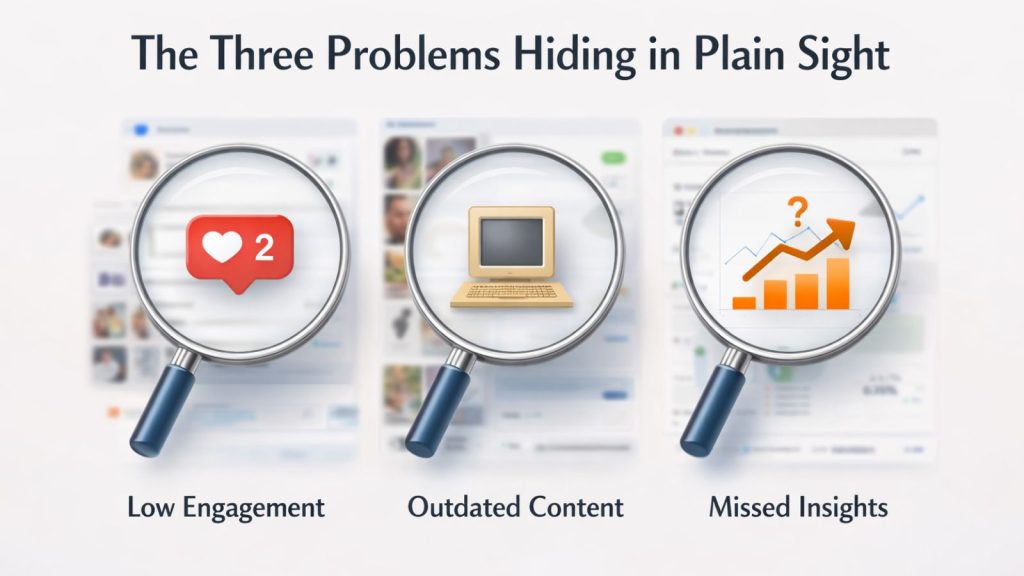
The Three Problems Hiding in Plain Sight
Before running the audit, this café’s Instagram looked fine on the surface. Clean grid, decent photos, regular posting. The AI audit run through Google Gemini using a research briefing and uploaded Reels flagged three structural issues that no amount of pretty photos would fix.
Problem 1: The Name Field Was Invisible
The café’s Instagram name field simply read the owner’s first name. Nothing about coffee, nothing about New Ross, nothing about what the business actually does.
Instagram now works as a search engine. When someone searches “café New Ross” or “coffee Wexford,” the algorithm looks at name fields, bios, and caption keywords not hashtags. With a blank name field, the café was invisible to every potential customer searching for exactly what they offer.
The fix took 30 seconds: changing the name field to include keywords like “New Ross Café | Coffee & Food on Quay Street.” Immediately discoverable to anyone searching locally.
Problem 2: The Content Had No Theme
Looking at the last 12 posts, there was no consistent topic. Monday was a food photo. Wednesday is a sunset over the Dunbrody Famine Ship shared from a tourist page. Friday was a motivational quote. The following Monday was a staff photo with no caption.
Instagram’s algorithm groups accounts into content “neighbourhoods” based on recurring keywords and themes across your most recent 9–12 posts. When the content jumps between food, tourism, motivation, and personal updates, the algorithm can’t categorise the account. It doesn’t know who to show it to.
The audit recommendation was clear: every post should connect back to the café’s core identity. In this audit it was food, coffee, and the experience of being on Quay Street in New Ross. That doesn’t mean every post is a food photo. It means every post should make sense coming from a café.
Problem 3: The Wrong Content Was Getting the Effort
Here’s where the SortFeed data told the real story. When we sorted the last 200 posts by engagement, the top performers weren’t the styled food photography. They were:
– A shaky phone video of the owner pulling espresso shots at 6am
– A quick clip of the morning prep routine with coffee grinding in the background
– A Reel showing the view from the counter on a rainy Saturday
The posts the owner spent the most time creating the polished, styled shots consistently underperformed. The posts that took 30 seconds to record outperformed them by 3 to 1.
This is a pattern we see across local businesses from South Street to Quay Street. Audiences in 2026 respond to real, unfiltered content. The Instagram algorithm rewards it too authentic content holds attention longer, and attention is the currency the algorithm trades in.
What Changed in One Afternoon
With the audit results in hand, here’s what the café owner did between lunch service and closing:
Bio update (2 minutes): Added keywords to the name field. Updated the bio to say what they serve, where they are, and a clear call to action “DM us for catering.”
Content calendar reset (20 minutes): Instead of planning elaborate photo shoots, they mapped out a week of content using what they already do. Monday morning prep. Tuesday’s specials on the board. Wednesday’s regular customer moment (with permission). Thursday’s behind-the-counter chaos. Friday’s weekend plans.
Carousel strategy (15 minutes): Created one carousel showing “5 Reasons to Visit Quay Street This Weekend” each slide is a standalone point. Carousels generate 3.1 times more engagement than single images, and Instagram’s algorithm serves individual slides to users who skip, giving each slide its own chance to hook someone.
ManyChat setup (30 minutes): Set up a simple DM automation. Anyone who comments “MENU” on a post gets an automatic DM with the current menu and a booking link. This turned passive scrollers into active enquiries.
Total time: just over an hour. Total cost: nothing.
The Before and After
Before the audit:
– 8–12 likes per post, zero DMs from Instagram
– Two hours every Sunday creating content that nobody engaged with
– Name field: owner’s first name only
– No keyword strategy, no content theme, no engagement system
After the audit:
– Behind-the-scenes Reels reaching 150+ accounts within the first week
– Three DM enquiries about catering in the first 10 days from ManyChat
– Name field optimised for “café New Ross” searches
– Consistent content theme that the algorithm can categorise and recommend
– Content creation time dropped from 2 hours to 20 minutes because the best content is what’s already happening
The café didn’t need a bigger budget, a social media manager, or a professional audit. They needed data. The AI gave them that, and the changes followed naturally.
For the complete step-by-step breakdown of each tool and how to run the full audit yourself, see our full AI Instagram audit workflow guide.
What This Means for Your Business
This isn’t just about cafés. Whether you’re running a salon on South Street, a B&B with views of the Dunbrody Famine Ship, or a trade business covering all of Wexford the principles are identical. Your Instagram name field matters more than your hashtags. Your best content is probably the content you’re not posting. A free AI audit will show you both.
More and more businesses across the area are already finding ways to use AI without the big budgets as we covered in how local businesses are using AI marketing. You don’t need to be a tech business to benefit from this. You just need 90 minutes and a willingness to look at what the data says.
If you’re just getting started with marketing your business, our marketing tips for startups covers the broader foundations worth getting right alongside your Instagram strategy.
Frequently Asked Questions
Do I need to be tech-savvy to run an AI Instagram audit?
Not at all. If you can upload photos and type a message, you can use Google Gemini. The entire audit runs through a web browser no apps to install, no coding, no technical setup. It’s genuinely as simple as uploading your content and asking the AI to review it.
Will this work for a business that’s not a café?
Absolutely. The audit process works for any business with an Instagram account. Salons, shops, tradespeople, B&Bs. The AI evaluates the same fundamentals regardless of your industry: name field optimisation, content consistency, engagement patterns, and bio clarity.
How much does this actually cost?
Nothing. Google Gemini, Google NotebookLM, and SortFeed all have free tiers that are more than sufficient for a complete audit. The only investment is your time roughly 90 minutes for a first audit, and less once you know the process.
Take the Next Step
If you’re running a business anywhere from Gorey to New Ross and your Instagram isn’t pulling its weight, the tools to fix it are sitting right there free and ready to use. Run the audit, trust the data, and let the content your customers actually want to see do the work.
And if you want to take it further build a full marketing system, not just fix one platform speak with our team about your marketing. We work with local businesses across Wexford to build strategies that are practical, sustainable, and designed for how marketing actually works in 2026.